
Remembering the Free Existence of Our Native Ancestors
How Shall We Stave Off Amnesia About Our Original Free Way of Life?

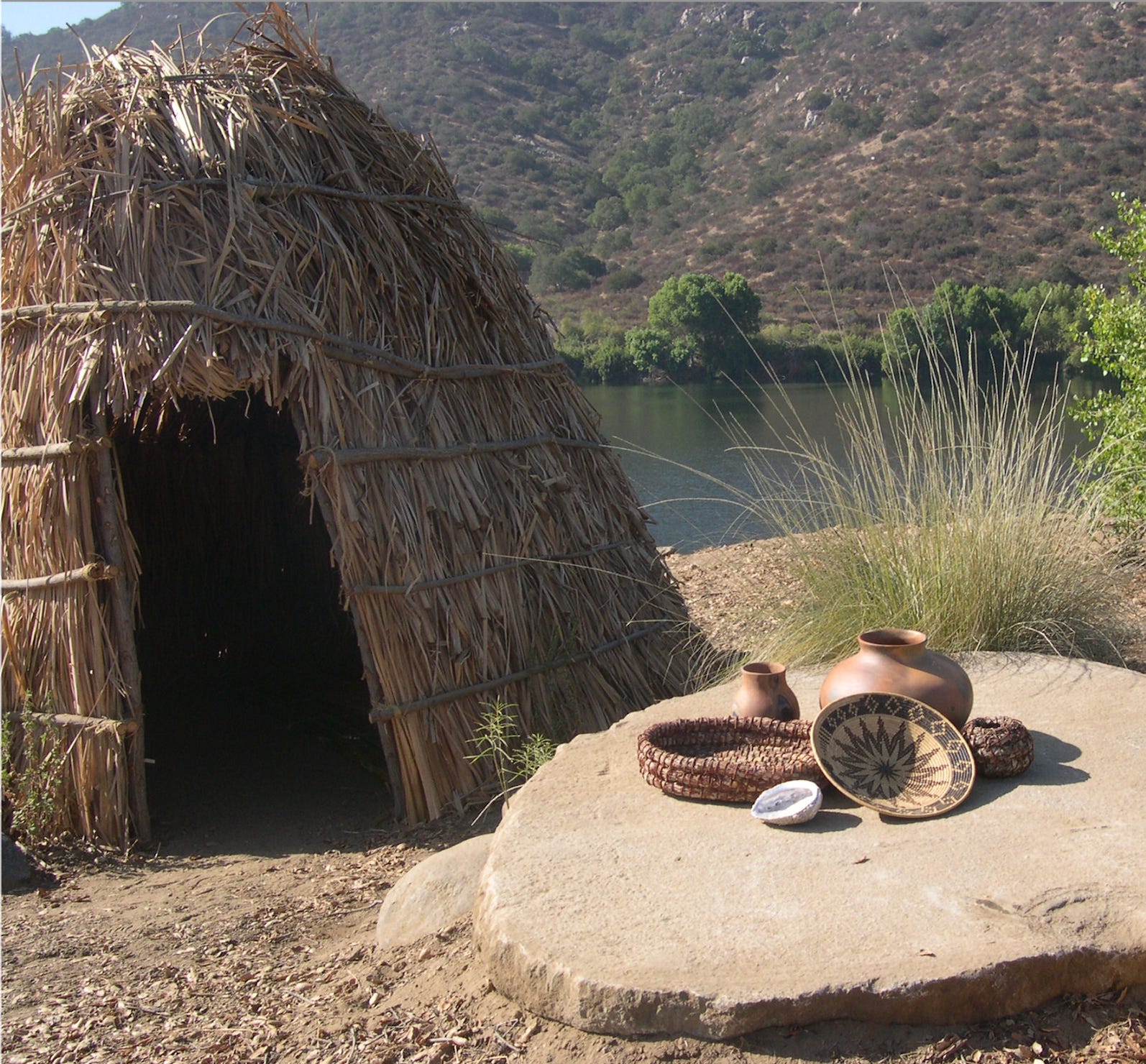
Those of us who trace our ancestral lineage to the free existence of the original Native nations and peoples of this Turtle Island continent (“North America”) have a definite choice: we can choose to explicitly question and challenge the system of domination that the United States has been imposing and continues to impose on our nations and peoples, or we can remain silent about it, and no longer hang on to the memory of our original free existence. We need to make certain we do not lapse into a form of historical amnesia.
The surest way to stave off amnesia about our original free way of life as original nations and peoples is by re-mind-ing ourselves daily that our ancestors lived for thousands of years free and independent of any Christian European claim of a right of domination.
We as the descendants of our ancestors inherited an indomitable right to live free from any claim of a right of domination, a claim that first began to be made by foreigners who sailed across an entire ocean and purported to possess a right to establish their form of domination where it did not yet exist.
In the Johnson v. McIntosh ruling of 1823, Chief Justice John Marshall said of our Native ancestors, “Their rights to complete sovereignty [a free existence] as independent nations, were [was] necessarily diminished [i.e., ended] . . .” To “diminish” the independent existence of a nation or people can be accomplished by an invading socity working to end their Free Way of Life by forcibly imposing patterns of domination on them.
By means of the Johnson ruling, the argument was being made by a small number of intellectuals working on behalf of the United States, that the free way of life of our nations and peoples had been ended. But instead of saying it this directly, the Supreme Court claimed that the “rights” of the Native peoples to live their free life had merely been “diminished.”
Think of how different the Johnson ruling would seem if Chief Justice Marshall, on behalf or a unanimous Supreme Court, had said of our Native peoples, “their right to live a free way of life was necessarily ended by the original fundamental principle that discovery gave [a] title [of domination] to those who made it [the discovery of this continent].”
Such plain wording by the Supreme Court would be so clearly stated that we would be able to understand those words to mean that our “right” as Native peoples to live ‘free from an imposed system of domination’ ended when seafaring Christian European foreigners arrived here to this continent and began to project their words, ideas, and arguments onto the free Native peoples who were already living here.
In this scenario, it would be presumed that we as Native peoples do not now have and never again will have the “right” to live free from the system of domination that the American society has imposed and continues to impose on our nations and peoples. We are now “free” to live under and subject to an imposed American system of domination.
Think of a society, such as the people of the United States, which has a long tradition of calling itself “free,” while claiming it is are rooted in “liberty,” and which has, through a process of despotism, robbed hundreds of Native nations and peoples of their free and independent existence. Given that track record, in what sense is the resulting American system of despotism, a Model of Liberty?
For that matter do the American people of today find themselves living free from the system of despotism [domination] that their ancestors created to strip our original Native nations of our free existence?
What has befallen the American people calls to mind what Sterling Edmunds wrote a century ago in The Lawless Law of Nations (1925), “No people who ever permitted its government to strip another people of its liberty ever saved its own; and according to the magnitude of the subjugations of its own government [system of domination] it has itself been ground under the heel of domestic despotism. Consider the history of Rome, and of France.”
U.S. federal Indian law and policy is the anti-Indian outcome of American colonialism [domination] and imperialism [domination]. And yet we as Native people are expected to ignore this fact and act as if none of this is important. We are expected to act as if the oppressive nature of the system of ideas (U.S. anti-Indian law and policy) that the American society has created for the domination of our Native nations and peoples is not something to focus on and address as the American president claims he wants to have American history written and told with a spirit of “truth” and “sanity.”
If it is true and accurate that a given society, such as the American society, is premised upon a presumed and “God-given” right of domination, is that society likely to develop a standard of judgment that declares its own assertion of a right of domination to be wrong in a spirit of truth and sanity? Highly doubtful.
We as Native people ought to be thinking creatively about how to powerfully respond to the U.S. government’s assertion of a “despotic” plenary power [of domination] over Native nations, which is so well exemplified by the U.S. Supreme Court’s wording in the Johnson ruling.
As I’ve pointed out in previous essays, in 1835 Judge John Catron of the Tennessee Supreme Court declared that the society of the United States has a right to coerce [dominate] Native peoples into “obedience.” What is that phrase referring to other than domination? Are we to conclude that the right to coerce Native peoples into obedience to a system of domination is part of what is being called American “democracy”?
In our present-day time-frame, if we spend any time at all thinking back on the free existence of our Native ancestors, we are only able to do so within the present-day context of the U.S. government’s ongoing claim of a right of domination and within the context of the overall system that has been created based on that claim.
We ought to work hard and in a disciplined manner to perfect the skills we need to contest and challenge the wrongful claim of a right of domination used against us. So long as we have a life force to do so, we should never stop using those skills to live in keeping with our sacred birthright, which is a way of life free from domination. We ought to steadfastly maintain the memory of our original free existence as Native nations and peoples, a free existence which ought to be regarded as the sacred birthright of all peoples across this beautiful planet we call Mother or Grandmother Earth.
Good call to memory and action for Native Peoples, along with pointing out that American citizens are basically 'under' the domination system, too.
Friendly addition. Our entire species lived free for thousands of generations, before the plague of 'civilization' began to stomp out our primal instincts. In other words, we were ALL Native Peoples. So as a bilagaana, I seek to help us all have what Daniel Quinn called the 'Great Remembering,' in response to the Great Forgetting. We must become allies in our mutual quest, and not spend time shaming those who were thrust into a role merely by accident of birth.